
How 92% of My Top Students Get into Ivy-Level Schools or Top UCs
/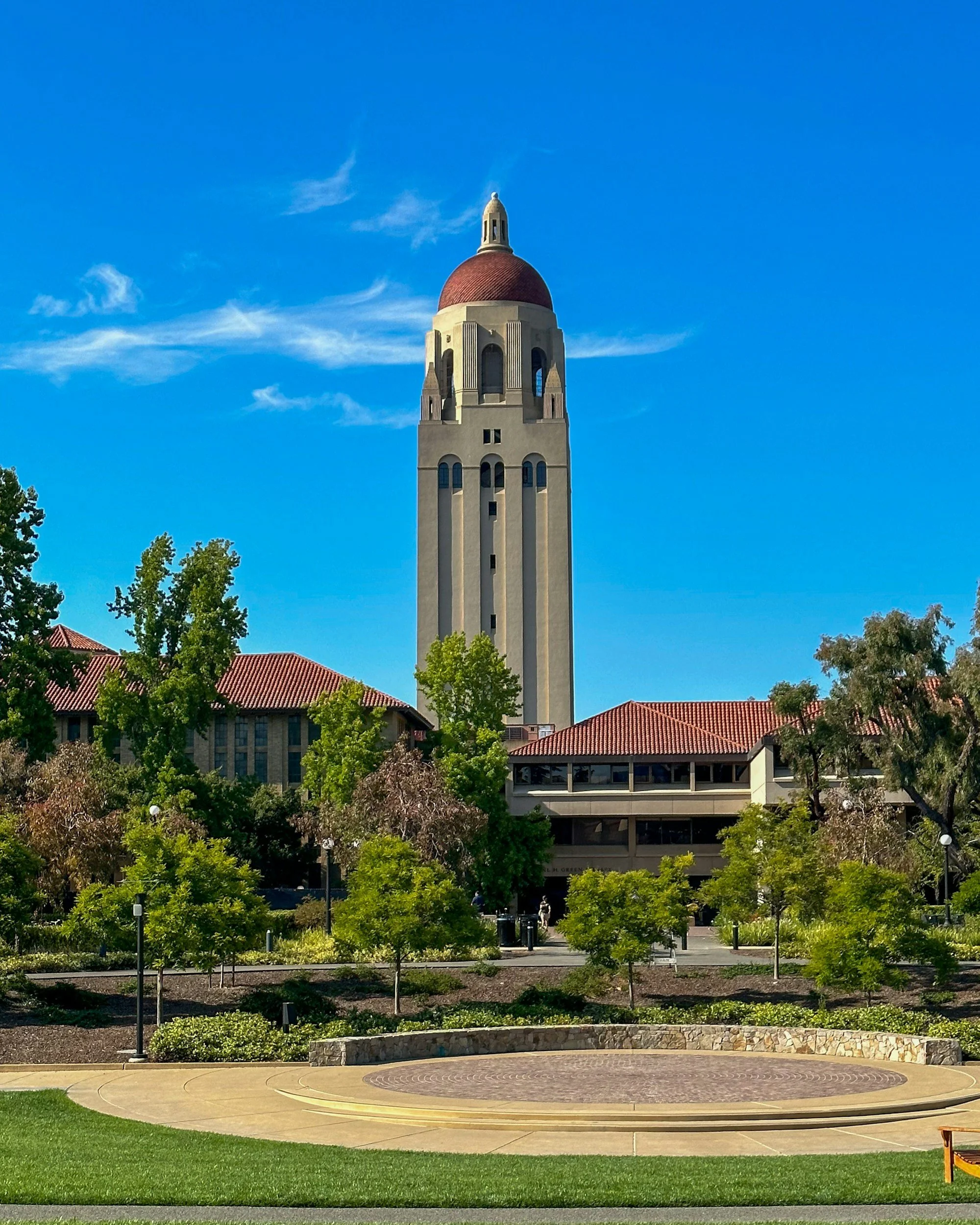
Stanford University, Credit Unsplash gibblesmash asdf
2/9/26
92% of my qualified students have gotten into an Ivy-level school or UC Berkeley / UCLA over the past 12 years. That’s what I discovered when I recently ran the numbers on my coaching practice.
This is incredible when you consider that admission rates at top schools have plummeted post-Covid, to just 3.6% at places like Stanford.
I want to clarify that my qualified students have close to straight As, SATs of around 1550 and capstone projects with (inter)national impact. I coach my students in developing these capstones projects if they haven’t already.
My admission results have gotten stronger over the years.
When I started tracking my numbers a few years ago, the rate was more like 2/3 of students getting in.
So, the 92% is astonishing.
I know college admissions are getting tougher every year so this number may go down, but I want to share the news because the questions that immediately came to my mind are these:
How is this happening? And how has my coaching changed over the years?
From Cookie-Cutter to Hyper-Personalized
When I first started in the coaching business fresh out of Stanford around 27 years ago, I worked for a high-end admission consulting company in Palo Alto. I taught a pre-set curriculum to classes of about 10 teens. It was very cookie cutter and we had very little one-to-one contact.
I left the field to become a journalist, and returned to coaching 12 years ago when I launched my own practice.
I made a deliberate shift to one-to-one coaching with a heavy emphasis on essays, drawing on my background in journalism. I loved the one-to-one work because I could really get to know my students as individuals, and truly tease out their stories.
My first year I worked with 11 students.
I quickly realized that was untenable.
Essay editing is extremely cognitively demanding so I don’t like to work with more than 1 to 2 students per day during application season and I rarely work with students in the evening.
I want to stay mentally fresh so over time, my practice has become smaller and smaller.
Today, I work with no more than five seniors per year — and I may shrink that number even further.
What this means is my students get a lot of my thinking, strategizing and creative attention — far beyond our scheduled sessions. Since I love my work, when I go on walks, when I’m journaling, my mind often drifts to my students and how I can best help them.
I remember specific details of their lives and may reference them months later during an essay brainstorm. I proactively suggest essay angles, content, and strategies my students wouldn’t have arrived at on their own.
That level of attention simply isn’t possible with larger caseloads.
At my first job in Palo Alto, I had 25 seniors.
This is a completely different model.
Capstone Projects
When I started my private practice, I focused primarily on essays.
After “reporting on” the stories of so many of my top students — how they achieved what they did, from inventing a new biofuel to landing high-level research internships at UCSF — I realized I could take everything I observed, everything that worked, and proactively teach it to my younger students.
Today, I’m a full-service consultant. Every new student benefits from years of case studies, strategic frameworks, and real-world examples.
I know what makes a capstone project oustanding.
Proven Narrative Framework
One of my biggest breakthroughs has been developing a clear system for helping students present their stories.
You can be one of the most accomplished students but if you can’t tell your story well, your work will never have impact.
A case in point: my student invented a biofuel in her garage, with no mentor — and was denied admission to many competitive summer programs before she worked with me.
After working with me, she got into MIT, multiple Ivy League schools, and won a full-tuition scholarship.
Later she showed me her summer program application essays and I quickly identified the problems.
She’d tried to answer every component of multi-part essay questions, which diluted her narratives and made the essays seem scattered.
She also didn’t discuss the impact of her work, which I made sure to highlight in her college applications.
I pushed her to answer questions like “How much more efficient is the new biofuel than traditional corn-based biofuel?” “How many tons of CO2 can be avoided with the new biofuel?”
The industry disruptive work was there, but she needed help with the storytelling.
I taught her to tell it just like I would as a professional journalist for a national news outlet.
Why My Students Get Into Elite Schools
Over time, I’ve come to understand something essential:
Elite college acceptances are not the goal of my work — they are the byproduct.
They are the natural outcome of teaching students how to identify meaningful problems, create real-world impact, and communicate their ideas with clarity and confidence.
The capstone projects and essays I guide my students through are not to “check a box” on an application.
They are vehicles for developing judgment, initiative, originality, and intellectual courage — the very traits selective universities look for, and the same traits that lead to fulfilling, successful lives long after college.
Since I’ve taught my students how to create their own opportunities rather than wait for permission from gatekeepers, my students don’t need elite schools to succeed.
And precisely because they don’t need them, they so often earn admission to the most selective institutions in the world.
—
What makes me the most proud of my work is not just the admission stats of my students, but witnessing the identity transformation they undergo with my guidance.
I know I’m giving them skills — and mindsets— they will use for the rest of their lives.
Most importantly, I have witnessed their stories and encouraged them to dream big.
That, to me, is my biggest achievement.
—
Are you a parent who wants your high-achieving teen to develop the skills, confidence, and originality that naturally lead to exceptional outcomes — in college and beyond?
Contact Alice to learn more about her boutique coaching practice. She currently has one opening for each of the Classes of 2027 and 2028.